

Your office shapes how your team works and how clients judge your business the moment they walk in. A poorly planned space leads to noisy desks, cramped meeting rooms and constant frustration, while a thoughtful layout supports focus, teamwork and growth. This is why many companies in Delhi NCR bring in experienced office interior designers in Delhi before they commit to a fit-out. This guide explains what designers do, which ideas work best, how to choose the right partner and how to plan your budget.
What Do Office Interior Designers in Delhi Actually Do?
They plan your workspace, design it, and manage the people who build it. That’s more than picking nice colours. A good designer starts by asking how your people work day to day, then measures the site and turns those answers into a layout. After that, they keep the electricians, carpenters, flooring crew and furniture vendors working from the same plan.
Here’s what the job usually covers:
- Measuring the site and checking electrical, AC and structural limits
- Planning space for desks, cabins, meeting rooms, reception and pantry
- Preparing 3D visuals, material choices and lighting plans
- Coordinating civil, electrical, carpentry, flooring and furniture work
- Supervising the site until handover
Why Your Office Layout Matters More Than You Think
For a client or a new hire, your office is often the first real proof of how you run things. A tidy, bright, well-organised space says you’re reliable. A cramped one with cables on the floor says the opposite, even if your business is excellent.
It affects daily work too. Think about a team that commutes an hour each way across the NCR. When they finally sit down, comfortable chairs, decent light and a quiet corner for focused work make a real difference. Design should start with people and workflows. Looks come second.
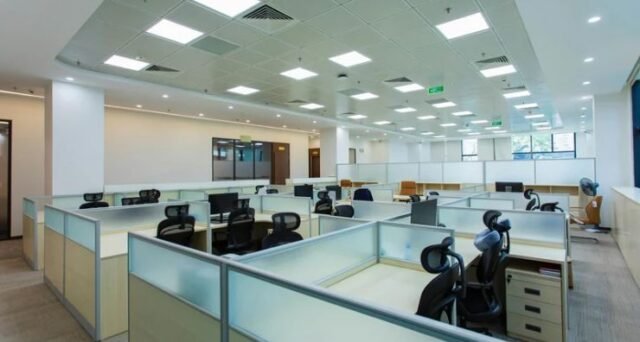
Corporate Office Interior Design Ideas Worth Trying
Good corporate office interior design feels professional without feeling stiff. These ideas work for most office sizes, from a 20-seater to a full floor.
Plan Zones Around How People Really Work
Skip the single giant open floor. Split the space by activity instead:
- Focus zones: quiet desks, ergonomic chairs and some sound control
- Collaboration zones: movable tables, writable walls and easy access to screens and power
- Meeting rooms: a mix of small huddle rooms and one or two bigger rooms for clients
- Recharge corners: a pantry or lounge where people can talk without disturbing others
Layer the Lighting
Use daylight where you can, but don’t rely on it alone. Add soft overhead light, focused task lighting at desks and a little accent lighting for reception or feature walls. One tip for Delhi: in summer, strong sun through large glass panels can cause glare and heat, so plan blinds or films early.
Take Acoustics Seriously
Open offices create energy, and they also create noise. Acoustic panels, carpet tiles, fabric partitions and closed meeting rooms help. Nobody expects total silence. People just want the choice between a lively corner and a quiet one.
Leave Room to Change
Teams grow, and hybrid schedules shift. Modular furniture, movable partitions and rooms that serve more than one purpose let you adapt without tearing everything out.
Add a Little Green
Plants, timber-look finishes, stone textures and natural fabrics warm up a space that might otherwise feel clinical. Putting greenery near desks and common areas is an easy start, and it’s low-cost.
Use Colour Sparingly
Keep the base calm and neutral. Then bring in your brand colours in a few chosen places, like reception, a feature wall or signage, so they stand out instead of overwhelming the room.
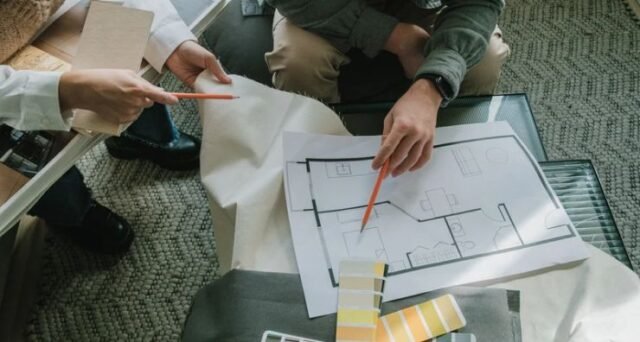
How to Choose the Best Office Interior Designers in Delhi
Finding the best office interior designers in Delhi isn’t about the prettiest portfolio. It’s about whether they understand how an office has to function once the ribbon is cut. Compare your shortlist on these points:
- Commercial experience: Have they finished offices of your size and type, not just homes?
- A clear process: Can they explain each stage, from brief to handover, without hand-waving?
- A written scope of work: It should say exactly what’s included in design, civil work, furniture, lighting and project management.
- Itemised estimates: You should see where the money goes, including revisions and a contingency.
- Realistic timelines: Ask how they handle delays between trades.
- References: Call a past client and ask about communication and after-handover support.
Red flags:
- A quote with no breakdown, just a per-square-foot number
- No layout options or 3D views before work starts
- Fuzzy answers on who supervises the site
- Pressure to sign before the scope is final
What to Expect from Commercial Interior Designers Delhi Companies Hire
Most commercial interior designers Delhi businesses rely on follow a similar sequence. Knowing it upfront helps you keep control of time and money.
- Brief: Share headcount, departments, privacy needs, meeting requirements, storage and growth plans.
- Site visit: The team checks measurements, electrical points, ventilation and structural limits. In many commercial buildings, this is also when you confirm landlord or building approvals.
- Concept and layout: You review options and 3D designs.
- Specifications and costing: Materials, furniture and lighting get finalised with an itemised estimate.
- Execution: Civil and services work first, then carpentry, flooring, painting and furniture.
- Handover: A final walkthrough, fixes for small defects and finishing touches.
Mistakes We See Again and Again
Most office projects go wrong because practical needs get missed, not because the design is ugly.
- Planning only for desk count: You end up with no space for meetings, files or breaks.
- Buying furniture for looks: A stylish chair that hurts after two hours is a bad buy.
- Too few power and data points: It sounds small, but it annoys everyone daily.
- Ignoring noise: Fixing acoustics after the fit-out costs far more than planning it in.
- Forgetting growth: A rigid layout may need rework within a couple of years.
How Much Should You Budget for an Office Interior?
There’s no honest single number, because cost depends on area, customisation, furniture quality, civil work, technology and deadline. A small office might need mostly furniture, lighting and finishing. A headquarters could need heavy joinery, branding, acoustic work and advanced meeting rooms.
So don’t compare only per-square-foot rates. Ask each firm for a scope-based estimate that lists:
- Design fees
- Civil and electrical work
- Furniture and fittings
- Lighting
- AC and HVAC changes
- Branding and signage
- A contingency amount
Quotes laid out this way are far easier to compare, and they leave fewer surprises for later.
Frequently Asked Questions
How much does office interior design cost in Delhi?
It depends on the office size, materials, furniture, civil work and level of customisation. Ask for a scope-based estimate instead of a flat per-square-foot rate, since it shows exactly where your money goes.
How long does an office interior project take?
A small office usually takes a few weeks, and a full corporate fit-out can take a few months. Approvals, custom furniture and design complexity are the main factors that change the timeline.
Can I redesign my office without shifting?
Yes. You can update the layout, lighting, storage, furniture and acoustics in place. Many companies do it in phases so daily work isn’t disturbed.
How do I choose the best office interior designers in Delhi?
Look for proven commercial experience, a clear process, a written scope of work and itemised estimates. Speak to a past client before you decide.
Do office interior designers handle the complete execution?
Many do, through turnkey services that cover design, buying, site work, furniture and finishing. Always confirm the exact scope in writing before you start.
Final Thoughts: Choosing the Right Office Interior Designers in Delhi
Ryan Creative Living is one of the studios in Delhi NCR that works on corporate fit-outs, and the checklist in this guide is the yardstick worth holding any studio to, including them. A well-planned office is an investment in your people, your brand and your growth, and it pays back every working day.
When you shortlist office interior designers in Delhi, look for a clear process, honest costs, real commercial experience and a design that can change as your business does.
